
Culture, sky & traditions
Why Can Eid Be Celebrated on Different Days in the Same Country?
How a thin crescent, a local horizon and different calendar traditions can give neighbours different days to celebrate.
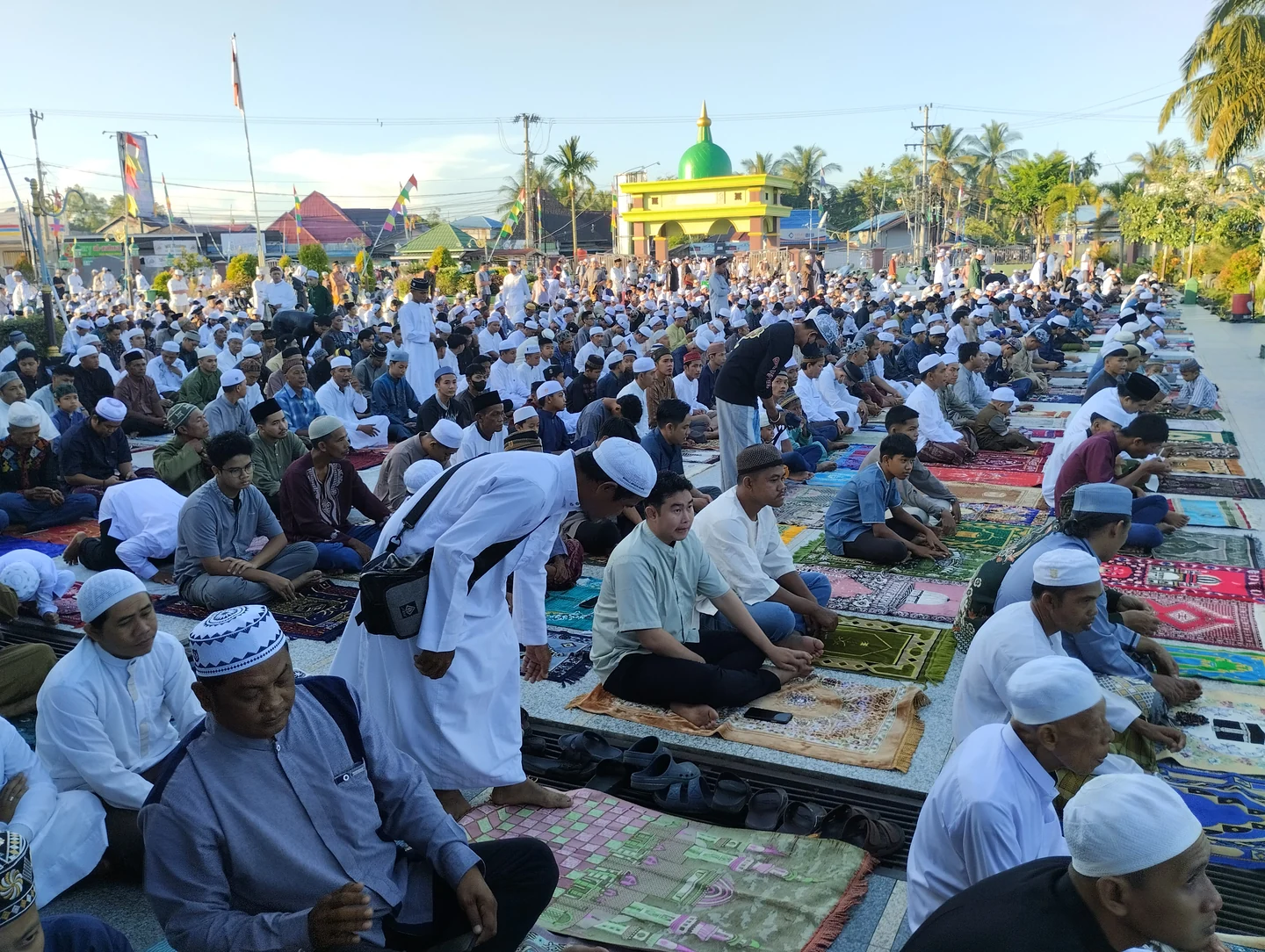
Picture two Muslim families living a few streets apart in the same British city. On Friday morning, one family dresses for Eid prayers. The other is still fasting and will celebrate on Saturday. Their houses share the same sky. How can they be a day apart?
That scene is imagined, but the difference is real. Eid al-Fitr starts on the first day of Shawwal, the month after Ramadan. Communities can reach different dates for that first day because they use different ways of establishing when a lunar month begins. [1]
The first evening of a lunar month
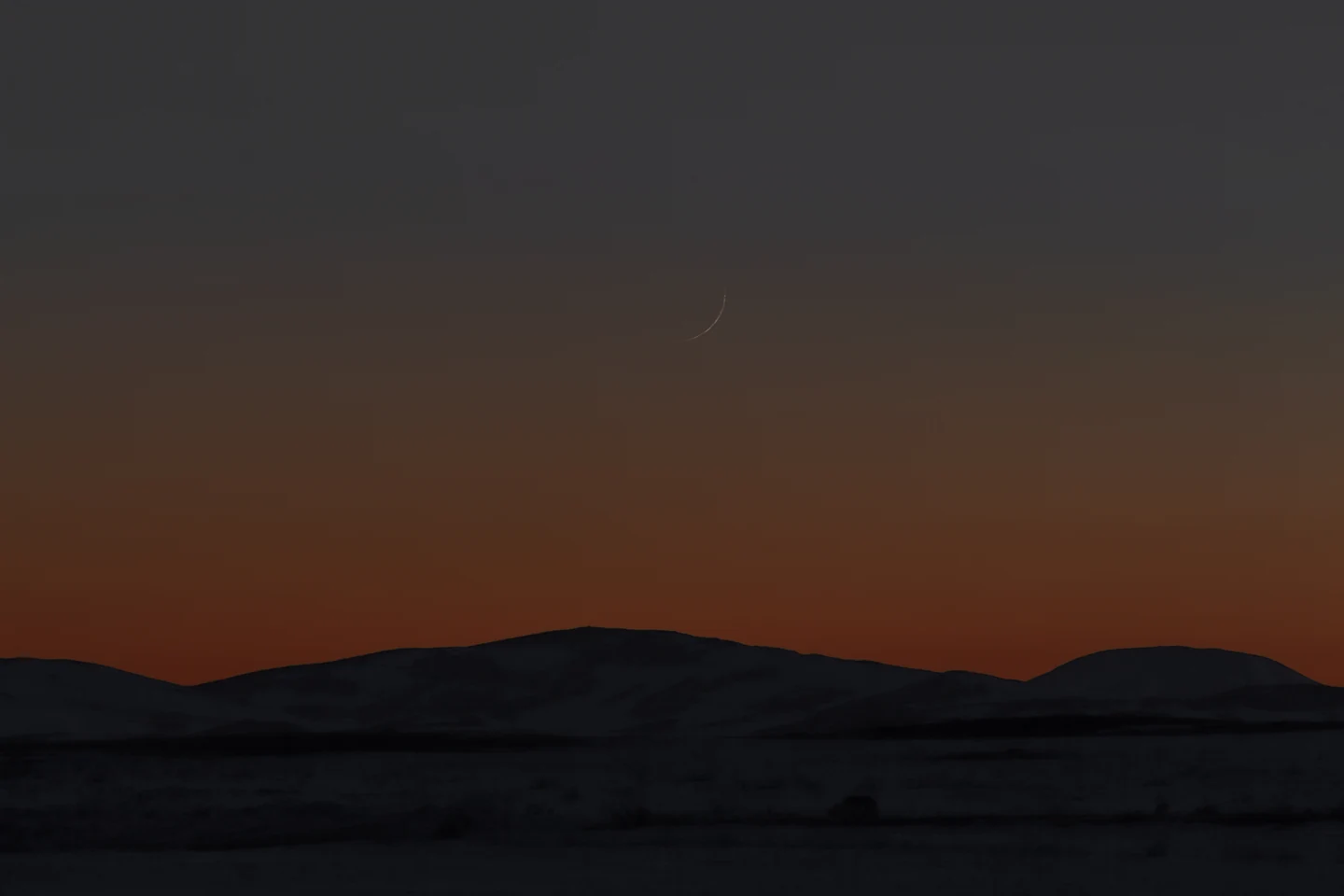
The Islamic calendar, also called the Hijri calendar, counts twelve lunar months. The Qur’an refers to the changing Moon as a way of marking time and the pilgrimage. The young crescent, known as the hilal, gives observers a sign they can look for as one month gives way to the next. [2] [3]
Under a traditional sighting method, observers look towards the western horizon after sunset on the 29th day of the month. If a sighting is accepted, the new month begins that evening, and Eid prayers, when the new month is Shawwal, follow the next morning. If there is no accepted sighting, the current month completes 30 days. At the end of Ramadan, that can mean one more day of fasting before Eid. [4] [5]
One new Moon, many local sunsets
The astronomical new Moon is a calculable instant. At conjunction, the Moon lies in almost the same direction as the Sun as seen from Earth, and its illuminated side faces mostly away from us. The first visible crescent is a later observation. The Moon must have moved far enough from the Sun in the sky to show a sliver in the remaining twilight. [6]
Imagine standing in London at sunset, then looking farther west across the Atlantic. Where sunset comes later, the crescent has had more time to develop. How high the Moon stands, how long it stays up after sunset and how bright the twilight is also matter. Latitude, the angle of the Moon’s path to the horizon, haze and cloud can all change the view. A visibility forecast estimates where observers might see it. A sighting still depends on conditions at the time. [6] [7]
One Moon. Different Eid Dates.
-
Astronomical new Moon
One instant worldwide. The Moon is near the Sun in the sky, with its lit side mostly facing away from Earth.
-
First visible crescent
Later, a thin crescent may be visible after sunset. Where you are and how clear the sky is both matter.
How a community sets the date for Eid al-Fitr
- Local sighting
Look for an accepted report from the local area or region.
- International sighting
Use a sighting report from abroad that the community accepts.
- Astronomical calculation
Use an agreed rule based on the Moon’s position to set the date, often in advance.
Two possible announcements. An accepted Thursday evening sighting could put Eid on Friday. A community that completes 30 days of Ramadan could celebrate on Saturday. Different calculation rules can also give different dates.
What counts as evidence?
A community that follows local sightings wants a report from the area it recognises. Britain’s New Crescent Society trains observers and collects reports across the UK. Another community may follow an overseas authority or accept a sighting from a wider region. University of Cambridge researcher Imad Ahmed describes how some British mosques came to rely on reports from elsewhere, including Saudi Arabia and Morocco, when sightings were hard to organise locally. [9] [1]
Other communities determine dates by calculation. The Fiqh Council of North America, for example, uses a rule based on the Moon’s height above the horizon and its separation from the Sun at sunset somewhere on Earth. The rule is a calendar criterion. A community that requires an observation may still use calculations to choose where to look or to assess a report. A forecast, an accepted observation and a calendar announcement answer different questions. [8] [6] [9]
Two announcements in the same city
In 2025, the East London Mosque and London Muslim Centre announced Eid al-Fitr for Sunday, 30 March. Hujjat, in Stanmore in north-west London, listed its first day of Shawwal and Eid prayers for Monday, 31 March. Both announcements are documented by the communities themselves. [10] [11]
The International Astronomical Center put that year’s conjunction at 10:58 UTC on Saturday, 29 March. Its forecast showed that crescent visibility depended on where people looked. That helps explain how a single astronomical event can lead to different dates, although a forecast alone cannot tell you which evidence a particular mosque accepted. [12]
Two mosques can share the same local sunset and still follow different rules about whose report counts, or whether calculation is sufficient. A difference of a day is therefore compatible with both communities applying their own rules consistently. The disagreement can be about how a date is established, even when the astronomy is agreed. [1] [8]
Which Eid are we talking about?
1 Shawwal
Eid al-Fitr
The Festival of Breaking the Fast marks the end of Ramadan. The date depends on when the community begins Shawwal. [13]
10 Dhul Hijjah
Eid al-Adha
The Festival of Sacrifice falls during the Hajj season and recalls Ibrahim’s willingness to make a sacrifice in obedience to God. Some communities follow their local lunar date, while others follow the Hajj announcement in Makkah and celebrate the day after Arafah. [13] [14] [15]
Why both Eids move through the seasons
A cycle from new Moon to new Moon averages about 29½ days. Twelve cycles add up to roughly 354 days. The Gregorian year has 365 or 366 days, so both Eids generally fall about 11 days earlier from one Gregorian year to the next. The Hijri calendar has no extra month to bring it back into line with the seasons. Over the years, a festival that falls in spring can move into winter, then autumn. [16] [3]
That gives the two families’ Friday and Saturday a wider context. The Moon’s cycles move both celebrations through the year, while each community’s method determines the date it observes.
Follow the Moon from your own horizon
Choose a place and date in The Sky Above to compare Moon phase, illumination and moonset. Explore places and traditions in Local Wonders, or see how another calendar uses the Moon in Why Does Diwali Fall on a Different Date Every Year?
Sources and further reading
- University of Cambridge · Imad Ahmed on lunar calendars in Britain
- Quranic Arabic Corpus · Al-Baqarah 2:189, parallel translations
- U.S. Naval Observatory · the Islamic calendar
- Wifaqul Ulama · regional sightings and 29- or 30-day months
- Sahih al-Bukhari 1900 · sighting Shawwal and completing Ramadan
- U.S. Naval Observatory · crescent Moon visibility
- HM Nautical Almanac Office · crescent visibility maps and guidance
- Fiqh Council of North America · calculation method for Ramadan and Shawwal
- New Crescent Society · the UK observation network
- East London Mosque and London Muslim Centre · 2025 Eid al-Fitr announcement
- Hujjat, Stanmore · first day of Shawwal and Eid prayers, 2025
- International Astronomical Center · Shawwal 1446 conjunction and visibility forecast
- Islamic Relief Canada · Hijri calendar and dates of the two Eids
- Islamic Relief Canada · Eid al-Adha and the remembrance of Ibrahim
- Fiqh Council of North America · local dates and the Hajj announcement for Eid al-Adha
- U.S. Naval Observatory · lunar phases and cycle length
Prepared with AI assistance and checked against the sources listed here. Send a correction.